

777 casino Plinko
Introduction
Plinko looks almost too simple to deserve a serious review. You drop a ball, it bounces through a field of pegs, and it lands in a slot with a multiplier. That is the whole visual idea. Yet in practice, 777 casino Plinko creates a very specific kind of tension that many classic online slots do not reproduce in the same way. I have tested enough casino games to know that simplicity on the surface often hides the real question: what does the session actually feel like when real money is involved? A quick read of real money Aviator crash game guide for 777 Casino players answers most questions about limits and account settings.
That is exactly why Plinko is worth a closer look. It is not a slot in the traditional sense, not a table game, and not a crash title either, although it shares some DNA with all three. It strips gambling down to a short decision loop: choose a stake, pick a risk level, sometimes adjust the number of rows, and watch a result unfold in seconds. For some players, that directness is the main attraction. For others, it can become repetitive or more volatile than expected.
In this review, I will focus strictly on the Plinko experience at 777 casino: how the mechanics work, what the risk settings really mean, how the pacing affects decision-making, and what a player should realistically expect before launching a session. If you want to understand whether Plinko suits your style, this is the part that matters.
What Plinko is and why it attracts so much attention
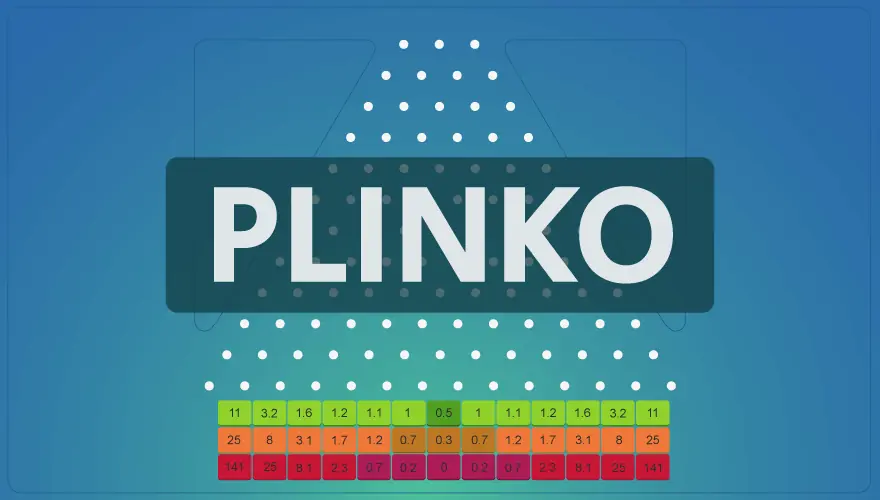
Plinko is a probability-based casino game built around a falling ball and a board filled with pins. Each drop sends the ball through a sequence of random deflections until it reaches one of the payout slots at the bottom. Those slots usually carry different multipliers. Lower multipliers tend to sit near the center, while the largest ones are commonly placed at the far edges, where landing is much less frequent.
The reason this format became so visible is not just that it is easy to understand. It is because the game turns randomness into something the player can watch in real time. In a slot, an outcome is generated instantly and then presented through reels and animations. In Plinko, the path itself becomes part of the experience. You see every bounce, and that visual journey creates a feeling of suspense that is disproportionate to the simplicity of the rules.
There is another reason for its visibility. Plinko is highly readable even for a first-time user. You do not need to study paylines, bonus symbols, wild combinations, side bets, or card strategy. The interface usually explains itself in seconds. That low entry barrier makes the game attractive to casual players, stream viewers, and users who want a quick session without learning a dense ruleset.
But the important point is this: easy to understand does not mean low-impact. Plinko can be mild, steady, and almost meditative at one setting, then turn harsh and swing-heavy at another. That gap between visual simplicity and practical intensity is one of the defining traits of the format.
How the core Plinko mechanics actually work
At 777 casino, Plinko generally follows the standard model used across modern gambling platforms. Before each drop, the player chooses a bet size and, depending on the version, may also choose a risk level and the number of rows. Once the ball is released from the top of the board, it collides with pegs and changes direction multiple times before landing in a prize slot.
Each collision is effectively a binary movement event. The ball shifts left or right as it descends. Over many rounds, this creates a distribution where middle slots are hit more often than edge slots. That is the statistical backbone of Plinko. The highest multipliers are not “hard” because of visual distance alone; they are hard because the sequence of directional changes needed to reach them is less likely over time.
What matters for the player is that the board is not merely decoration. It represents the payout curve. The center tends to hold frequent but modest returns, while the edges hold rare but potentially large multipliers. So when you watch the ball drop, you are not watching an animation layered on top of a result. You are watching a visual representation of how the payout model is framed.
| Element | What it does | Why it matters in play |
|---|---|---|
| Bet size | Sets the base amount for each drop | Directly affects session cost and the impact of variance |
| Risk level | Changes the payout distribution across the board | Higher settings usually mean more extreme highs and more weak results |
| Rows | Adjusts the depth of the board and path length | Can alter hit distribution and the shape of possible returns |
| Multipliers | Determine the return for each landing slot | Show where frequent low returns end and rare high returns begin |
One detail that many new players miss is that the board is designed to create a familiar psychological illusion: when the ball drifts close to a high multiplier and then falls back toward the middle, it feels like a near miss. In practical terms, a near miss has no predictive value. The next drop is still independent. But emotionally, it can make the game feel “close” in a way that encourages longer play.
Why risk settings change the entire session
If I had to identify the single most important Plinko setting, it would be risk level. This choice often matters more than the visual layout because it changes the balance between frequent smaller returns and rare larger multipliers. In other words, it changes not just what you can win, but how the session behaves minute by minute.
On a lower-risk setting, the board usually offers a tighter payout spread. You are more likely to see modest results and less likely to encounter dramatic spikes. That can make the session feel smoother and easier to track. It does not remove randomness, but it reduces the emotional amplitude of the experience.
On a higher-risk setting, the distribution opens up. The top-end multipliers become more attractive, but weak outcomes and dry stretches become more noticeable. This is where Plinko can feel deceptively harsh. Because each round is short and clean, players sometimes underestimate how quickly a high-risk configuration can eat through a bankroll if the rare top hits do not arrive.
That practical shift is more important than any marketing label attached to the game. “Low,” “medium,” and “high” are not cosmetic modes. They are different session profiles. A player who enjoys frequent feedback may find high-risk Plinko frustrating. A player chasing occasional standout multipliers may find low-risk Plinko too flat.
- Low risk usually suits players who want steadier pacing and fewer sharp bankroll swings.
- Medium risk tends to offer a more balanced session, though “balanced” never means predictable.
- High risk is built for larger variance, longer cold spells, and occasional standout returns.
A useful way to think about it is this: in slots, volatility is often hidden inside the math model. In Plinko, the choice is placed directly in front of you before the drop starts. That makes the game feel transparent, but it also means the responsibility for session tone moves more clearly onto the player.
What creates the appeal of Plinko in real play
The appeal of 777 casino Plinko is not only about possible multipliers. It is about rhythm. A round resolves quickly, the controls are minimal, and the result is easy to read. That creates a loop with very little friction. You do not need to interpret symbols or wait through long bonus sequences. You place the drop, see the path, get the result, and decide again. Anyone stuck on account verification can follow the steps laid out in 777 Casino returning player bonus codes tips.
This short cycle is one of the strongest hooks in the format. It gives the player constant feedback. Even when outcomes are modest, the session keeps moving. That can make Plinko feel more active than many slots, especially slower ones with layered animations and long reel stops. Those comparing loyalty perks can weigh this section against coupons guide for 777 Casino accounts.
There is also a curious contrast at the heart of the game. Visually, it can feel light and almost playful. Emotionally, it can become tense very quickly. A ball bouncing through pegs looks harmless, but the combination of short rounds and wide multiplier ranges can create an intense stop-start pattern in the player’s mind. One second the session feels calm, the next it feels like every drop matters.
One of the most memorable things about Plinko is that it makes randomness visible without making it understandable. You can watch every bounce, yet you still cannot meaningfully control the outcome. That contrast is a big part of its staying power.
How to read probabilities and potential outcomes without fooling yourself
Players often ask whether Plinko can be “read” or timed. The honest answer is no in any reliable sense. The ball path may look physical, but in regulated online gaming the result is still governed by a random system. The visual descent is there to present the outcome in a satisfying format, not to create a skill layer that lets you outplay the math.
What you can understand, however, is distribution. Middle outcomes happen more often. Extreme edge outcomes happen less often. Higher-risk settings widen the gap between common and rare results. That is the level at which Plinko should be approached: not as a game to beat, but as a format whose payout shape you can choose and manage. A quick read of 777 Casino bonus code review with payment and login details answers most questions about limits and account settings.
This matters because many players misread short-term patterns. A few central landings in a row can create the impression that the board is “cold.” A near-edge sequence can create the impression that a big multiplier is due. Neither conclusion has value on its own. Plinko is particularly good at triggering pattern-seeking behavior because the path is visible and the rounds are fast.
My practical advice is simple. Treat each drop as independent, assume the rare multipliers are genuinely rare, and size your stake around the possibility of extended ordinary results. If you need frequent reinforcement to enjoy a session, choose settings that match that preference instead of hoping a high-risk board will suddenly behave like a low-risk one.
| Player assumption | What usually happens in reality |
|---|---|
| “The ball almost hit the top slot, so a big result may be coming.” | Near misses do not improve the probability of the next drop. |
| “High risk means better value.” | It usually means a more uneven return profile, not a better long-term edge. |
| “Simple interface means low danger.” | Fast rounds can accelerate losses if stake control is weak. |
| “I can sense where the ball will go.” | The path may look readable, but it is not a dependable prediction tool. |
How Plinko compares with slots and other casino formats
Compared with classic online slots, Plinko removes narrative packaging. There are no themed reels, no 777 Casino free spins with terms and limits, no expanding wilds, and usually no long bonus ladder. That makes the experience cleaner but also narrower. A slot often mixes anticipation, symbol reading, and occasional feature rounds. Plinko compresses everything into one immediate event.
That difference changes how a session feels. Slots can hide long low-value stretches behind visual variety. Plinko does not hide much. If the results are ordinary, you see that plainly. If the session is swinging hard, you see that too. Some players appreciate this honesty. Others prefer the layered presentation of reels because it makes the experience feel richer.
Against roulette, Plinko has a similar dependence on chance but a very different emotional texture. Roulette is resolved in a single spin with a clear odds structure. Plinko feels more animated because the path unfolds step by step. Against crash games, Plinko is less about timing and more about passive observation after setup. Against card games, it has virtually no strategic depth in the traditional sense.
So where does it sit best? I would place it between slots and instant-win formats. It borrows the visual suspense of a slot, the quick resolution of an instant game, and the distribution-driven logic of a probability model. That hybrid identity is precisely why it stands out.
How risky Plinko really is and who it suits best
Plinko can be relatively mild or highly aggressive depending on configuration, but it is never a game I would describe as strategically forgiving. The player has limited control after setting the round parameters. That means bankroll discipline matters more than tactical skill.
For players who enjoy short sessions, clear results, and direct control over stake and risk mode, Plinko can be a strong fit. It also suits users who find traditional slots too cluttered or too dependent on feature triggers. If you prefer a stripped-down format where every round is obvious and immediate, this game delivers that cleanly.
It may be less suitable for players who want deep decision-making, evolving bonus structures, or the sense of progression that some reel-based games create. It can also disappoint players who expect constant high-value outcomes simply because the board shows large multipliers on screen. Those top numbers are part of the attraction, but they are not the standard experience.
One practical observation stands out here: Plinko often feels safer than it is because there is no dramatic crash point and no spinning reels shouting for attention. The calm interface can mask how quickly repeated drops add up.
Strengths and weak points that matter in practice
The strongest side of 777 casino Plinko is clarity. You know what you are doing, what you are risking, and what kind of payout profile you selected. There is very little decorative noise. That transparency is genuinely useful, especially for players who want to understand the format instead of chasing features they barely follow.
Another strong point is pacing. The game respects short attention spans without becoming unreadable. You can run a brief session and still get a complete feel for the format. You can also test different risk levels quickly and notice how sharply the experience changes.
Its biggest limitation is repetition. Because the core loop is so lean, players who need variety may lose interest faster than they would with slots or live casino games checks before using 777 Casino. Plinko is also vulnerable to emotional overcommitment during cold stretches, especially on aggressive settings where players keep chasing the rare multiplier that just missed.
There is also a subtle design issue worth noting. The game gives the player a sense of involvement because the ball’s path is visible, but the actual level of agency is low once the drop begins. For some users that is satisfying. For others, the illusion fades quickly and leaves a format that feels too passive.
- Main strengths: fast rounds, easy rules, visible payout logic, adjustable session style.
- Main limitations: limited depth, repetitive loop, high sensitivity to risk settings, strong temptation to chase rare outcomes.
What to check before starting a session
Before launching Plinko at 777 casino, I recommend looking at a few things that directly affect the experience. First, check whether the version lets you adjust rows as well as risk level. That can change the board behavior enough to matter. Second, understand the multiplier map before staking more than a test amount. A board can look generous because of a few large numbers at the edges while the practical return pattern remains concentrated in the middle.
Third, decide in advance what kind of session you want. If the goal is a longer, steadier run, lower stakes and a calmer risk profile make more sense. If the goal is to take a few shots at larger multipliers, accept from the start that the session may end quickly. This sounds basic, but Plinko punishes vague planning because the rounds move so fast.
If a demo version is available, it is worth using briefly. Not because it reveals secret timing, but because it helps you feel the tempo and see how often ordinary outcomes appear compared with the eye-catching edge multipliers. In Plinko, expectation management is half the battle.
The last thing I would stress is emotional framing. Do not judge the format by one lucky burst or one rough streak. Plinko can produce both in a short window. What matters is whether you actually enjoy the structure of the experience: quick resolution, visible randomness, and minimal strategic input.
Final verdict on 777 casino Plinko
777 casino Plinko offers a focused gambling format built on visible chance, fast decision cycles, and adjustable variance. Its real strength is not novelty alone. It is the way the game makes probability feel immediate. You do not have to decode reels or wait for bonus rounds to understand what is happening. The board shows you the logic: frequent central outcomes, rarer edge hits, and a session profile shaped heavily by your chosen risk level.
That same clarity is also where caution is needed. Plinko is simple to enter, but it can become expensive quickly if you treat fast rounds as harmless. High-risk settings in particular can create long stretches of underwhelming results before a standout multiplier appears, and sometimes that standout result does not come within the session at all.
I would recommend Plinko to players who value directness, short rounds, and a clean interface with little clutter. I would not recommend it to anyone looking for deep strategy, rich bonus structure, or a long-form slot experience with evolving features. In plain terms, Plinko is best for players who enjoy watching randomness unfold in a compact, transparent format and who are comfortable with the fact that transparency does not reduce uncertainty.
If you approach it with realistic expectations, 777 casino Plinko can be genuinely engaging. Just do not mistake its simple appearance for a gentle game. That is the central truth of Plinko: easy to grasp, quick to play, and capable of producing very different sessions depending on how you set the risk.
FAQ
How does Plinko on the 777 official site work during real-money play?
A ball is released from the top and drops through the grid, hitting pegs that guide it into a multiplier zone at the bottom. Each landing determines the round result, based on the selected stake and the current board settings.
What should be checked before releasing a ball for the first time?
Confirm the mode (demo or real-money) and make sure the stake is set to the amount intended for this session. Also review any visible risk indicators like volatility level and multiplier range so the game feels predictable.
What happens if the game fails to load or the ball launch button stays inactive?
Refresh the page and confirm the browser supports required game scripts. If the issue continues, sign out and back in from your casino account, then try again. Clearing cache or switching networks can also help when the session connection is unstable.
Where can the current multiplier and risk level be seen for this Plinko round?
The live board area shows the multiplier zones and the round settings applied for the current session. If anything is unclear, opening the game rules panel (if available) is the fastest way to verify the active volatility and board layout.
How does the stake setting change the outcome in a Plinko session?
The stake sets the amount applied to each ball drop. The multiplier on the landing zone is then applied to that stake to determine the round result.
Can Plinko be played on mobile, and does the ball release work the same way?
Mobile play is supported, and the interaction is typically tap-based: selecting the stake and tapping to launch the ball. The game layout should remain responsive, but smaller screens may make it easier to mis-tap, so zooming the view can help.
When Plinko is launched from a casino game lobby, does it keep the same settings as before?
Launching from the lobby may reset some session controls like stake selection, depending on the current session state. After returning to the table, checking the stake and mode before the next ball helps avoid unwanted settings.
Does a promo code or bonus code affect Plinko, or is it used elsewhere in the casino?
Promo codes and bonus codes are typically tied to eligible casino promotions rather than the core Plinko mechanics. If a promotion is available for your account, the conditions shown during activation determine whether Plinko play is impacted, including any related wagering requirements.
How can support help when Plinko results look unexpected or when a payment-related action blocks gameplay?
Support can review your account activity and the current game session state when something looks off. If a deposit or withdrawal request affects access to real-money play, the support team can guide which steps to complete next and what status is currently applied. Keep any relevant timestamps and screenshots of the Plinko board state to speed up troubleshooting.